On June 10-11, 2026, the CROSSMARE Project Coordinator, Lazaros Karagiannidis and the project’s Communication and Dissemination Manager, Panayiota Agkoli, attended the CERIS Event, Projects to Policy Seminar 2026, organized in Brussels, Belgium.
This high-level seminar brought together researchers, policymakers, and practitioners to exchange insights on how EU-funded research can better support evidence-based policy and operational decision-making in the field of security and resilience.
Every year, the European Research Executive Agency (REA) and the Directorate-General for Migration and Home Affairs (DG HOME) organize the Projects to Policy Seminar. This in-person, by-invitation-only event gathers the key representatives of the newly launched projects and it is structured into thematic breakout sessions, preceded by a plenary session with several presentations of general interest. The aim of the event is to raise awareness among the relevant policy Directorates-General on the newly launched projects and provide guidance to the new projects regarding policy-related outputs the Directorates-General are interested in.
The 2026 edition
The seminar was opened with a welcome and presentation of the agenda in Ballrooms 1 & 2, setting the stage for a productive two days of networking, knowledge exchange, and synergy creation between projects and EU policy.
Day one, the participants met in groups split into four thematic areas for more targeted and insightful discussions:
- Fighting Crime & Terrorism (13 projects)
- Resilient Infrastructure (4 projects)
- Disaster Resilient Societies (11 projects)
- Border Management (8 projects)
The event featured various informative sessions and panel discussions, covering several topics, including but not limited to:
- Policy Roundtables
- Dissemination, Communication & Exploitation in Security Research and feedback to policy
- Innovation & Research Activities of EU Agencies and of the Joint Research Centre
- Exploitation of projects and innovation uptake
CROSSMARE participated at breakout session by thematic area Border Management (8 projects) – AUtoBorder, CROSSMARE, CustomAI, MARCONNECT, OnMoveID, ORION, PACK and ORBIS.
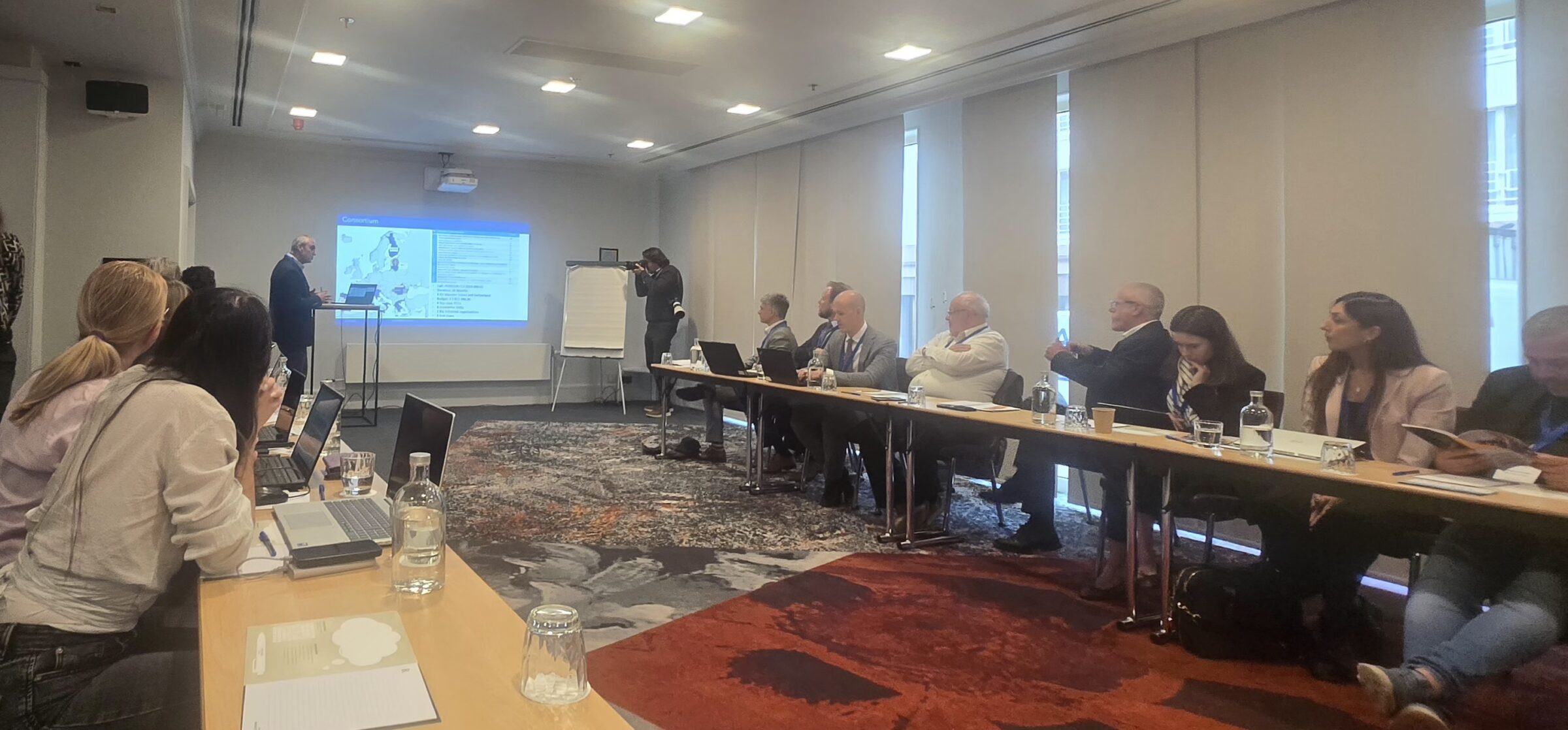
Representing CROSSMARE, Project Coordinator Lazaros Karagiannidis had the opportunity to present the ongoing work, highlighting its contribution to advancing maritime risk understanding, improving preparedness, and strengthening cross-border collaboration in complex maritime environments.
The discussions also emphasized the importance of translating research outcomes into actionable policy tools and operational capabilities.
Day two shifted focus toward cross-thematic collaboration, with breakout sessions across thematic areas. CROSSMARE joined Group 1, engaging in cross-cutting discussions alongside projects like AutoBorder, CROSSMARE, DARE, ARTEMis, ForMAT, AMALTEIA, BEHOLDER, ECHO and ORBIS.
The presentations generated significant interest among the participants, leading to several follow-up discussions during the networking coffee breaks.
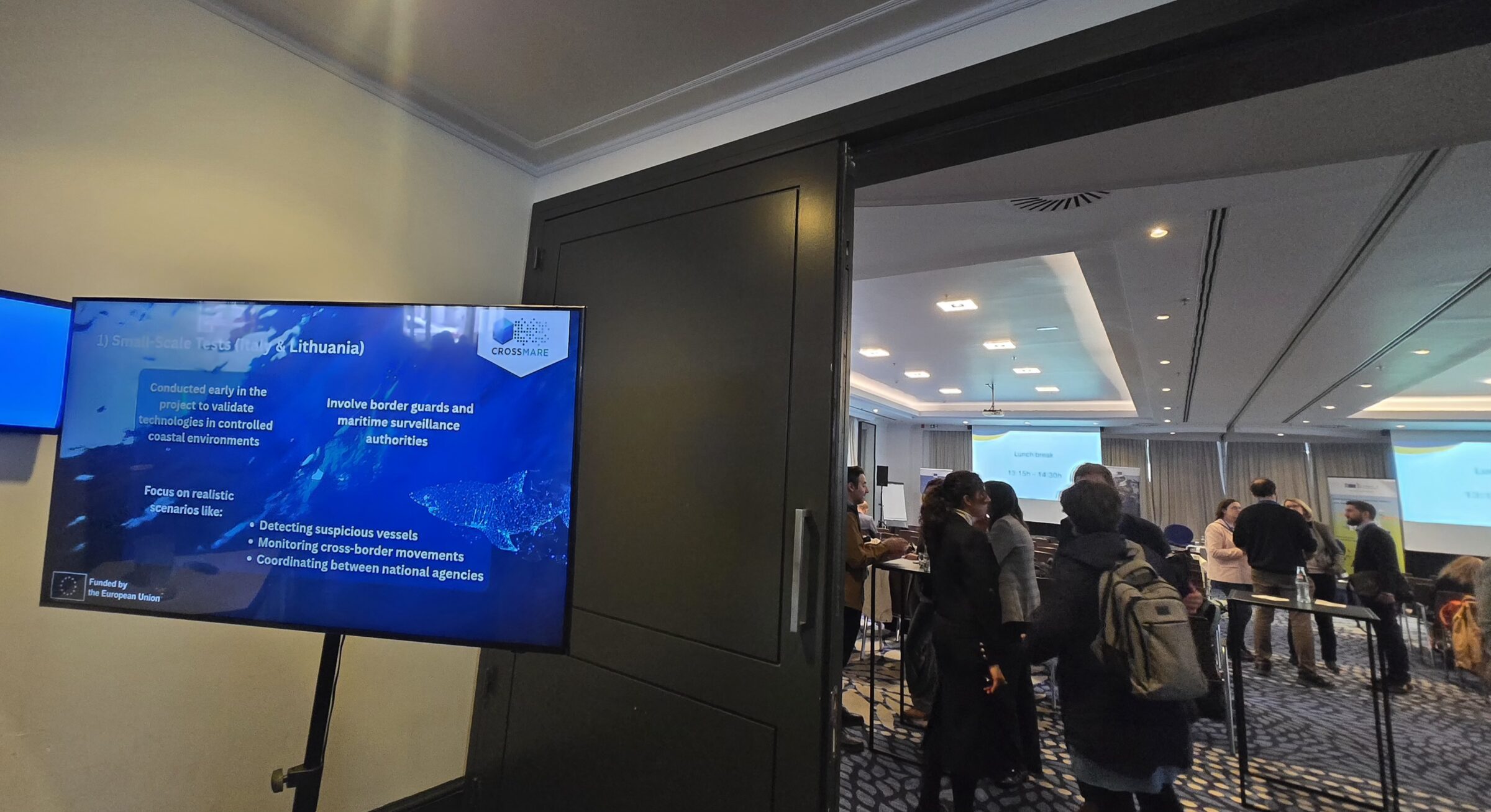
The seminar was a great success. It concluded with a session in Ballrooms 1 & 2 where DG HOME area coordinators shared the key take-aways from the breakout sessions, fostering a very direct and honest contact between the project consortia and the European Commission.
The key takeaways from the discussions held during the event include a strong consensus on the need to include practitioners and end-users at all stages of development, ensuring the technology aligns with day-to-day operational realities. Furthermore, participants emphasized focusing on exploitation early on in the project lifecycle to guarantee that solutions can be smoothly adopted by the market and policy frameworks later on. The discussions also highlighted the vital importance of developing trustworthy, explainable AI systems that keep humans in the loop, alongside creating interoperable architectures that can securely bridge data sharing across different national customs authorities.
We value the engagement with fellow projects and stakeholders within the CERIS Community and look forward to continuing collaboration that bridges the gap between research and policy impact.