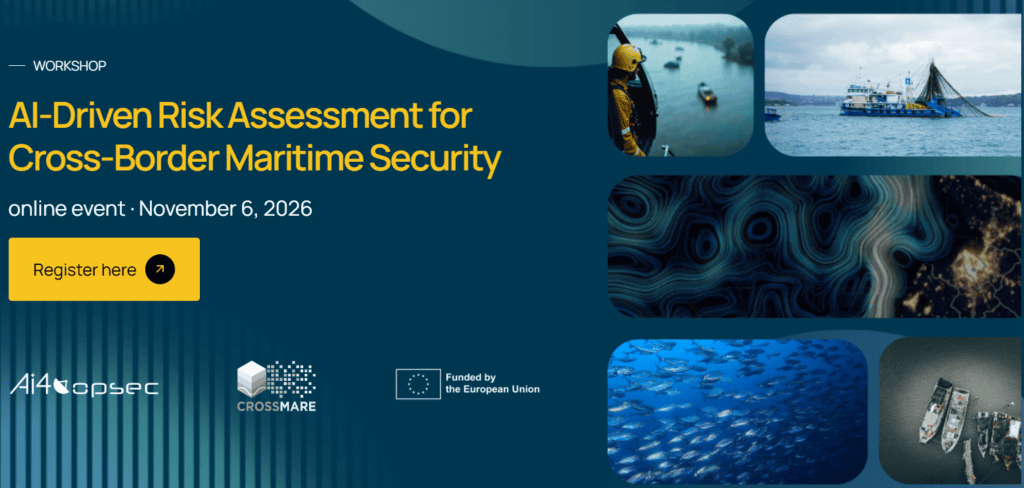
🌊 AI-Driven Risk Assessment for Cross-Border Maritime Security
How can Artificial Intelligence and Earth Observation contribute to safer EU sea borders and more effective maritime surveillance?
Join AI4COPSEC and CROSSMARE on 6 November 2026, 11:00–12:00 CET, for a joint online workshop exploring how AI-driven risk assessment and multi-source data fusion can help identify emerging maritime threats, improve situational awareness, and support faster, better-informed decisions.
The session will highlight the complementary approaches of the two EU-funded projects: AI4COPSEC’s AI-enabled analysis of Copernicus Security Services and CROSSMARE’s work on cross-domain interoperability, AI-assisted decision support and secure, CISE-compliant information sharing.
By bringing these capabilities together, the workshop will explore new opportunities for more connected, coordinated and effective European maritime security.
📅 Date: 6 November 2026
🕚 Time: 11:00–12:00 CET
💻 Format: Online webinar
Register: https://us06web.zoom.us/webinar/register/7817905988154/WN_6RXp-7w-REC8KPEmaDHtpQ#/registration
Learn more: https://ai4copsec.eu/workshop-ai-driven-risk-assessment-for-cross-border-maritime-security/
🎤 MEET OUR SPEAKERS
1) Lieutenant Colonel Pedro Manuel Almagro Calles (Guardia Civil)
𝑳𝒊𝒆𝒖𝒕𝒆𝒏𝒂𝒏𝒕 𝑪𝒐𝒍𝒐𝒏𝒆𝒍, 𝑯𝒆𝒂𝒅 𝒐𝒇 𝒕𝒉𝒆 𝑺𝑰𝑽𝑬 𝑷𝒓𝒐𝒈𝒓𝒂𝒎𝒎𝒆 𝒂𝒏𝒅 𝑻𝒆𝒄𝒉𝒏𝒐𝒍𝒐𝒈𝒊𝒄𝒂𝒍 𝑰𝒏𝒏𝒐𝒗𝒂𝒕𝒊𝒐𝒏 𝑶𝒇𝒇𝒊𝒄𝒆, 𝑮𝒖𝒂𝒓𝒅𝒊𝒂 𝑪𝒊𝒗𝒊𝒍
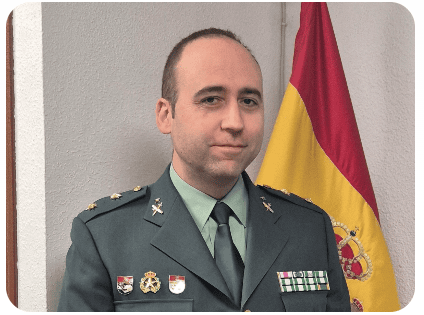
Lieutenant Colonel Pedro Manuel Almagro Calles is an officer of the Spanish Guardia Civil currently serving at the Border and Customs Command. He is Head of the SIVE Programme and Technological Innovation Office, working in the fields of border surveillance and technological innovation.
Throughout his career, he has served in Public Security Units and held assignments in the Guardia Civil General Staff, Officers Academy, Traffic and Criminal Investigation units. He is a graduate of the Spanish Armed Forces Staff Course and holds Master’s degrees in Security, Defence and International Security Policy, and Road Safety and Traffic. His professional background combines operational experience, strategic planning, border security and technological innovation.
2) (UPM)
Associate Professor of Geomatics, Università Politecnica delle Marche
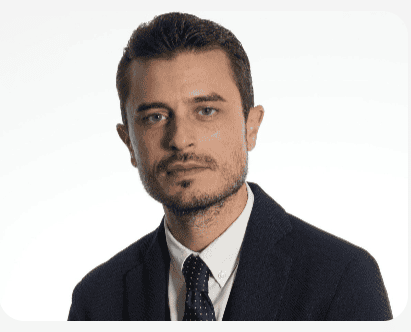
Roberto Pierdicca is Associate Professor of Geomatics at Università Politecnica delle Marche in Ancona, where he jointly leads the Geomatics Applications and Processing (GAP) Lab. His research centres on GeoAI, the use of artificial intelligence on geospatial and Earth observation data. In AI4COPSEC he works on fusing satellite and vessel data to detect small fishing boats that do not transmit AIS.
He has published more than 150 papers and is cited among the top 2% of most cited researchers worldwide in Geosciences, according to Stanford University. He received the European Geosciences Union Outstanding Early Career Scientist Award in 2020 and the Remote Sensing Young Investigator Award in 2025.
3) Spyros Athanasiadis (ICCS)
𝑺𝒆𝒏𝒊𝒐𝒓 𝑹𝒆𝒔𝒆𝒂𝒓𝒄𝒉𝒆𝒓 𝒂𝒏𝒅 𝑺𝒄𝒊𝒆𝒏𝒕𝒊𝒇𝒊𝒄 𝑷𝒓𝒐𝒋𝒆𝒄𝒕 𝑴𝒂𝒏𝒂𝒈𝒆𝒓, 𝑰𝒏𝒔𝒕𝒊𝒕𝒖𝒕𝒆 𝒐𝒇 𝑪𝒐𝒎𝒎𝒖𝒏𝒊𝒄𝒂𝒕𝒊𝒐𝒏 𝒂𝒏𝒅 𝑪𝒐𝒎𝒑𝒖𝒕𝒆𝒓 𝑺𝒚𝒔𝒕𝒆𝒎𝒔
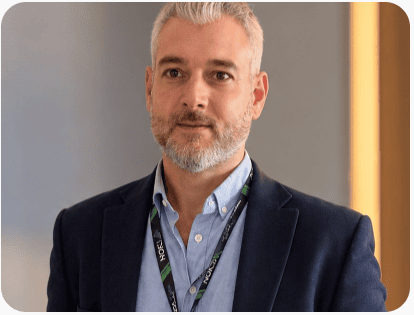
Spyros Athanasiadis is a Senior Researcher and Scientific Project Manager at the Institute of Communication and Computer Systems (ICCS) of the National Technical University of Athens (NTUA), within the Crisis Management and Secure Societies (CMSS) division. He is part of the core coordination team of the CROSSMARE project.
With more than 15 years of experience in research and innovation and ICT, he is actively involved in the design, coordination and implementation of EU funded R&I projects, particularly in crisis management, security and emerging technologies. He holds a PhD in Electrical and Computer Engineering from NTUA and has authored more than 25 journal and conference publications.
4) 𝐉𝐨𝐬𝐞́ 𝐑𝐚𝐦𝐨́𝐧 𝐌𝐚𝐫𝐭𝐢́𝐧𝐞𝐳 𝐒𝐚𝐥𝐢𝐨 (Bull)
𝑺𝒆𝒏𝒊𝒐𝒓 𝑹𝒆𝒔𝒆𝒂𝒓𝒄𝒉 𝑻𝒆𝒄𝒉𝒏𝒐𝒍𝒐𝒈𝒊𝒔𝒕, 𝑩𝒖𝒍𝒍 (𝒇𝒐𝒓𝒎𝒆𝒓𝒍𝒚 𝑨𝒕𝒐𝒔)
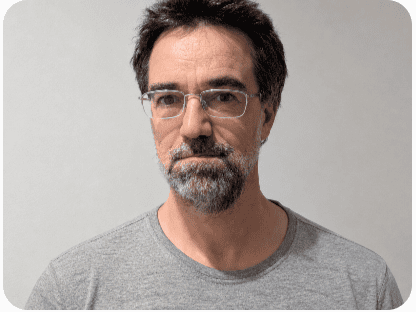
José Ramón Martínez Salio is a Senior Research Technologist at Bull, formerly Atos, in Madrid, where he works on artificial intelligence and system architecture for EU research projects. In CROSSMARE, he is the technical lead for his company, overseeing its technical contribution to the project and developing AI solutions for vessel detection using computer vision, as well as agentic AI approaches for identifying anomalous vessel behaviour.
Before joining Atos in 2016, he spent more than a decade in defence simulation, including work with NATO modelling and simulation groups. He is an industrial engineer from the Universidad Politécnica de Madrid.